

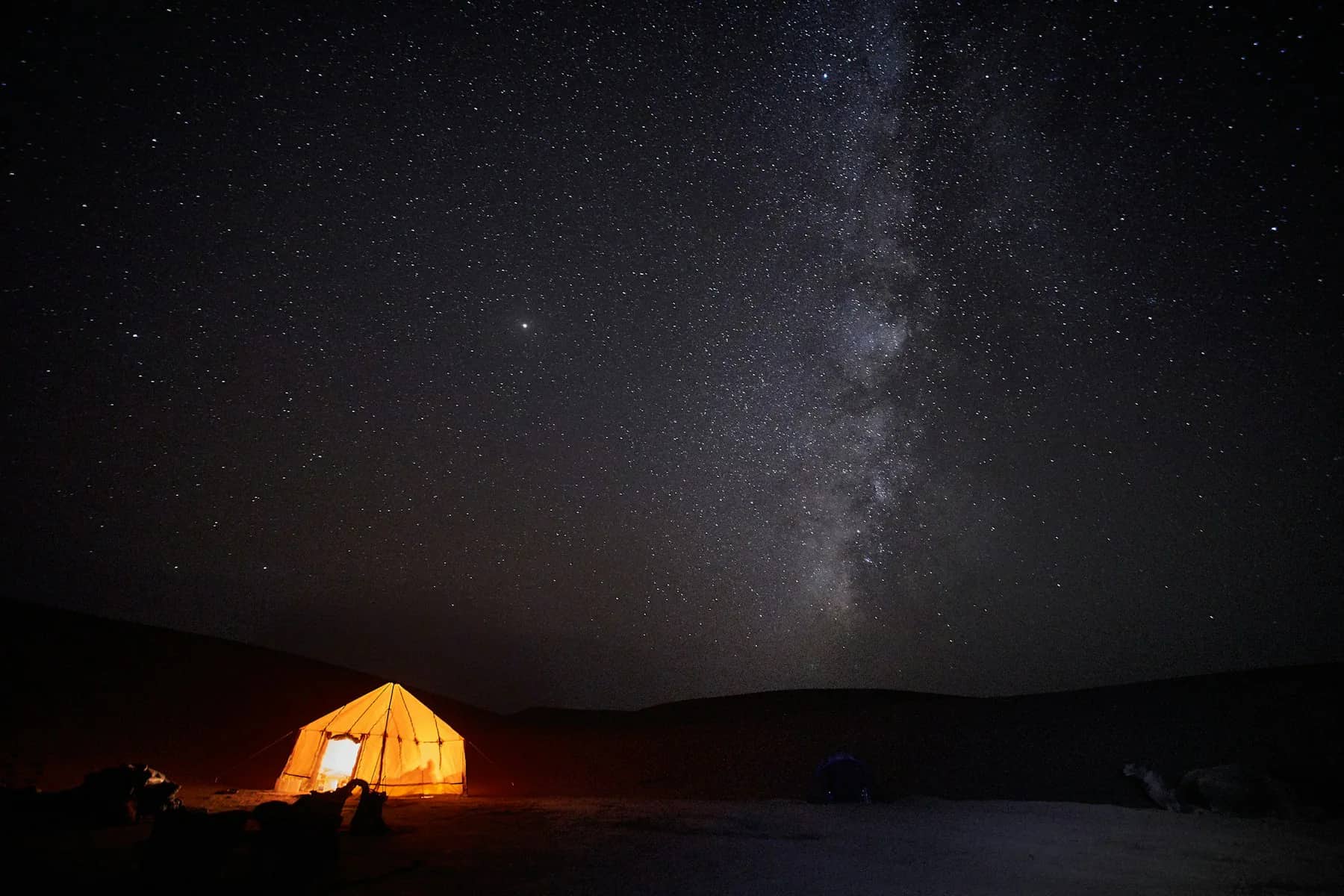
Spending a night outdoors changes the pace of a trip: temperatures drop, different sounds emerge, and the sky becomes part of the landscape. Special equipment is not required, but choose a permitted site, check the forecast, and plan discreet lighting.
Key highlights
- Check the weather and moon phase
- Choose a permitted site away from bright lights
- Pack warm layers and safe lighting
- Leave no waste and avoid unsafe fires
Choose the right night and place
Check the forecast, wind, cloud cover, and moon phase: a bright moon can make faint stars harder to see. Confirm that camping is allowed and access is safe; do not enter private property or closed areas.
Prepare a comfortable camp
Bring an extra layer, water, a lamp with enough battery, and a backup option. Use low, directed light to preserve your night vision and avoid disturbing other people or wildlife.
Observe responsibly
Start by finding constellations with the naked eye or use an app downloaded in advance. Do not shine lights at animals, nests, or neighboring camps; follow local fire rules and never light a fire during restrictions or high-risk conditions.